Prospect Refuge Theories
To be and not to be

I’ve spent much of my wintering viewing home architecture and design videos. I stated in a post last July that I was “in the process of moving.” Believe it or not, I hadn’t yet picked a place or even chosen a town or village to live in. The operative word at the time (and now) was process. I was challenging my thought processes and base impulses, to better decide where to root for a spell, for a real change. I wanted a place that I could call my own by autumn, one home for a year or so. Such a simple thing. Or is it?
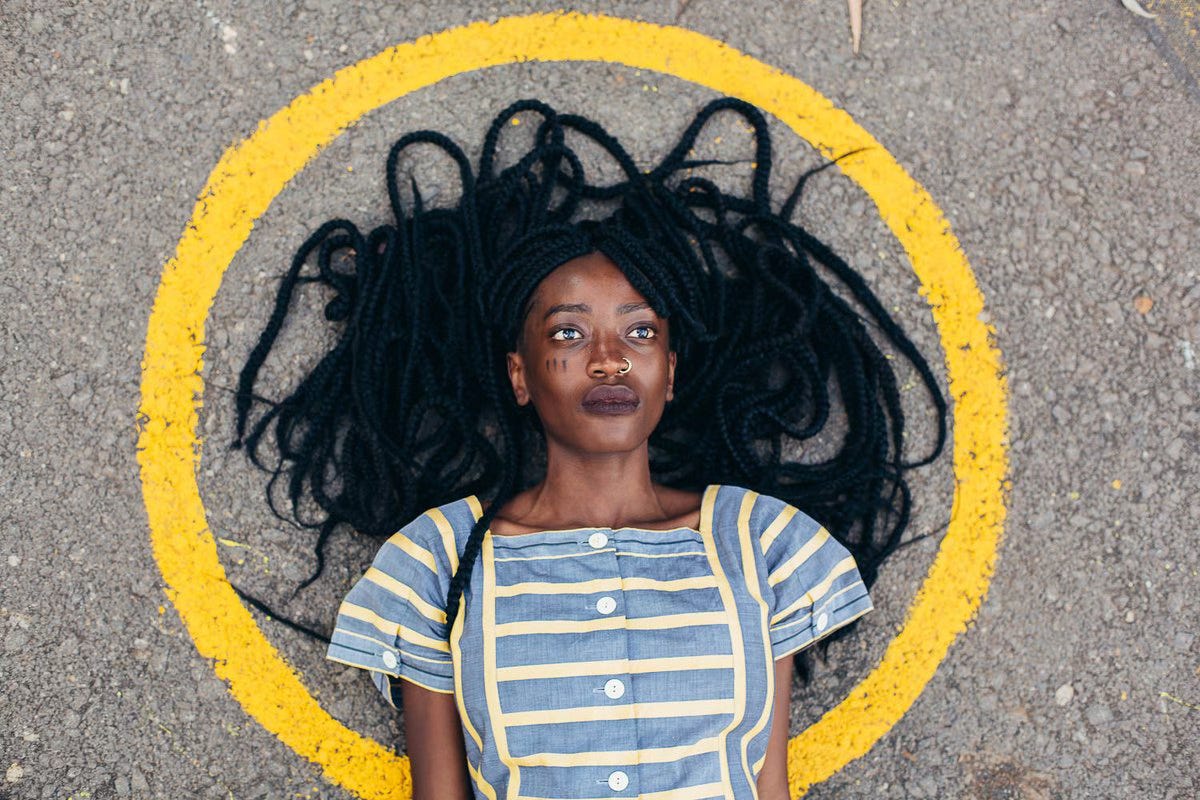
(Image by documentary and portrait photographer and curator, Sarah Waiwa.)
Prospect Refuge Theory was developed by geographer and academic Jay Appleton, part of his contribution to landscape theory. This habitat theory posits that humans prefer and seek out spaces where one is both in a place of refuge but also at a vantage that provides the ability to survey or take in their surroundings. We want to be able to perceive and acquire visual data and take in environments (prospect) while also feeling sheltered, hidden or protected (refuge). There are natural and manmade examples of this ideal. Caves, vistas and hilltops provide such advantage. An observation deck, a bay window’s bench, or the booth seat that lets you watch the restaurant and its exit, all meet the mark. The forts and miradouros (viewpoints) of Portugal come to mind, as do the plateaus of my beloved Abidjan; So does a pet’s favorite sleeping position, at the foot of the dining table, or on the porch when everyone’s stepped away.
It’s understandable that such an evolutionary preference is factored into architecture and design, not because we must actively scan for the same threats or predators as our ancestors, but because the psychological bias and wiring still resonates, passed down generation after generation. To feel at home, to feel safe, certain visual features should be prioritized. We want to see without being (so) seen. We want to let our guards down without any confusion about our boundaries. Even the perception of safety suffices (the brightness of a room suggests nothing lurks; order and clean lines signal peace and confirms survival fitness.) Nothing to see here, says all that light. But when the time comes, you’ll see ‘it’ coming, promises all that expanse.
My own lifestyle and travel choices have perhaps been more prospect oriented than refuge-sensible. On that spectrum from Security to Novelty, I often find myself valuing unconventionality. Why not, I think, again and again. Why not go, move, check, run, climb? One reason parades in the language. “Novelist seeks novelty.” Apropos. (There’s another! À propos first meant ‘with regard’.) Besides, in my experience, any enclosure can feel like a trap. Objects and possessions, traps. Leases, bills, contracts, subscriptions, recurring appointments, traps, traps, traps, traps. From behind a barrier, one never stops scanning for a horizon line. That always sounded like the life of the sleepless, not “the work my soul must have” (Rev. Dr. Katie Geneva Cannon), not ideal conditions. Better a trip than a trip hazard, I thought. Better to clear out and search for the mystery than to wait around for the prowling predator, the imminent attack.
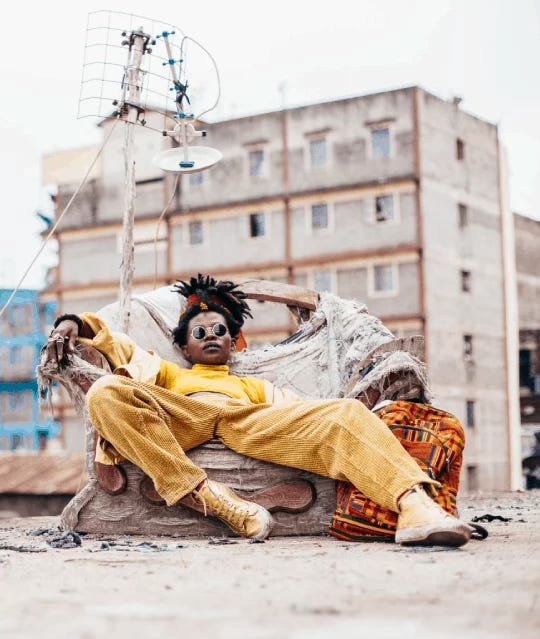
(Image by Ugandan documentary and portrait photographer Sarah Waiwa.)
The innate curiosity of humans is deeply satisfied by odysseys. But we also have strong security needs. As much as we might regularly feel a desire for something different— distractions at least, stimulation at best— we are hard wired for safety. A view is grand; Perspective (not looking at but looking through) serves us longer. Prospect Refuge Theory is one reminder that we can scratch dual intrinsic itches even when they seem at odds. The shade is sharper just alongside the light. You don’t want to live and die in the grotto, but isn’t it nice to come in from the storm?
Many of us know just how lucky we are to be able to do just that.
Other times, we dream or remember the beauty of refuge, en attendant.
Hence the video spree. I love beauty, and I wanted to entice myself to stay put.
I’ve been here before. The main character in my novel is “a failed architect” —her words (and yes, I know that sort of means mine.) I picked up on her repressed fears and her internalized sense of failure long before I understood a damn thing about architecture. Everywhere she went, she scanned her surroundings, and for several months, maybe years… let’s say for several drafts… I thought she/I scanned her environment in an effort to populate a story’s setting. Then I realized she had an eye for design, for outlines, and for danger. Her hypervigilance was familiar even when her surroundings weren’t. So I stayed on a slow drip of architecture videos, lectures, and exhibits for years, trying to understand what she/I might not understand, trying to develop valences: the viewpoint(s) this character came to think of as hers as well as the truer one(s) I had to access in order to nail her interiority and exteriority. I know, I know. There’s so much we can never know, even about ourselves or a creation of ours. And yes, this is hella meta and tortured. Moving on.
This time around, meaning the summer-fall-winter of 2024, I returned to architecture and design content not as a ‘failed architect turned hopeful immigrant’ but as a nomadic writer eager to make a physical home again. Not build, not yet anyway. Not find, anymore. Make (which has a relationship to the words ‘match’ and ‘fitting’, relations of aesthetics and design.) That’s one of the many lessons a writing life imparted on me. Make something with what you have, and make something with what you do not have. Read, research, sketch, imagine, reimagine. Create. And by God, let your guard down already.
The part of my psychological wiring that is a guard, that wants to decide whether situations are safe or not, rejects the false sense of security a lease/bill/contract/bed/couch/lamp/vase used to guarantee. She/I know life is much more complex than that, much more fragile. She/I know there isn’t always a clear view of what’s coming. We know. And still we wait.
It is good news when we can wait inside where it’s warm or cool. We can wait with released breaths. We can wait in loving and divine company. We can wait happily or wait peacefully or just fucking wait a minute. Waiting, like resting, is so often an option we forgo—a privilege, and its own protection. I suck at waiting. But we can wait… and not just by the gate or the window or a flashing screen, but under the canopy of a tree, in the quiet of the village courtyard, in a retreat of one’s own, with the birds, in the dark.
So often, a (life) meaning’s difference comes down to emphasis, what syllable we stress. Do I care to focus on the prospects? Do I care to obsess about refuge? Or do I care to be the forever theorist?
If I care, I care. Some flight triggers never vanish. So, why ignore them? The more aware we are of multiple realities—external and internal—the more freedom we have. Wanting to attain and wanting to nest (so, wanting to be and not to be) doesn’t have to represent a trick or dilemma. It can mean opportunity. It can be integration. The one preference we have might be the regular programming we need to interrupt, question or adjust, to pair to a new, evolved liking. Changing philosophies, ideologies, and psychologies requires touching that dial.
My dial has long been set to going. I adjust it now to (or toward) staying and find the same lessons in this new reality:
Just because it’s familiar, doesn’t mean it’s safe.
The unknown can be more secure.
There is a stranger in us all who needs letting in and letting out, who just wants to come home again and again, trusting and believing their compass.
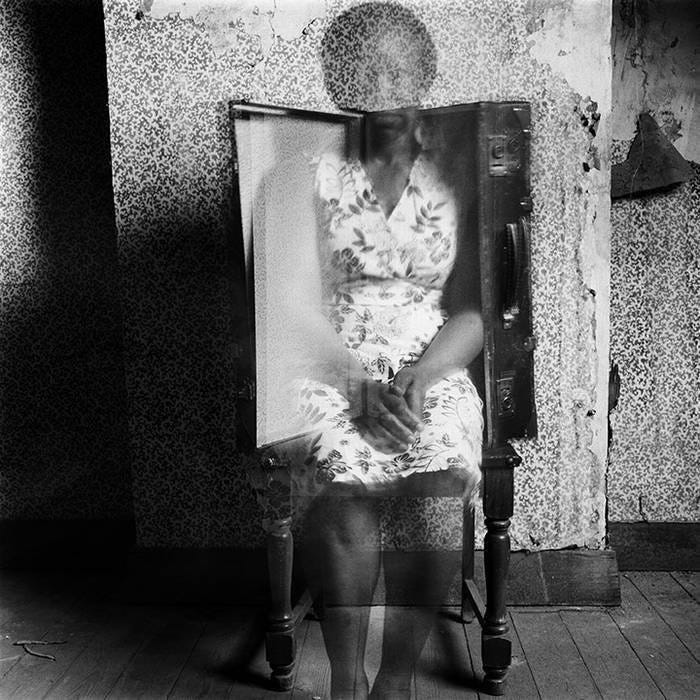
(Togolese photographer Hélène Amouzou’s ‘Voyages’)